Adriana Gómez, spokesperson for the Mothers in Resistance Chiapas collective, reported that they are translating activities and search forms into four indigenous languages of Chiapas to disseminate them on radio and social media in municipalities across the region.
We will do this in four languages: Tzeltal, Chol, Tzotzil, and Zoque.
In an interview with Aristegui Noticias, she said the idea arose from people who came to the collective asking for help from municipalities where an indigenous language is spoken.
“We have received cases from municipalities like Yajalón, Chilón, Tila, and Sabanilla—places where a language is spoken—and it occurred to us that we needed to find a translation so that the forms would reach where they need to go,” she explained.
She noted that they have already begun uploading video materials to Facebook and that they will tour local radio stations with the audio recordings to request their dissemination, initially in the Chol language.
“We’re going to go to every radio station where we’re assigned to search and ask the radio operator to make them aware of what’s happening and have them play it so that if anyone has any information, we’ll give them a phone number where they can contact us,” she explained.
Adriana Gómez mentioned that they are currently working on audio and video productions, but the plan is to continue with the graphic search sheets.
She explained that the production is based on their own resources, with the support of teachers and family members in the region to clarify terms and ensure clear communication.
“Some Indigenous teachers and Indigenous family members are helping us because there are words that aren’t pronounced the same as in Spanish, and we want to let them know that we’re searching for people who have disappeared and that they can join us, or if they have any, to give us information about their whereabouts.”
Initially, her own family helped her translate into the Chol language because she is originally from the municipality of Yajalón, where her grandparents and parents are Indigenous.
“I come from an Indigenous area, I’m from the municipality of Yajalón. My grandparents are Indigenous, my father was an Indigenous teacher, and I showed my mother the video with the translation. My mother understood the message well: that they are searching for them, they are missing.”
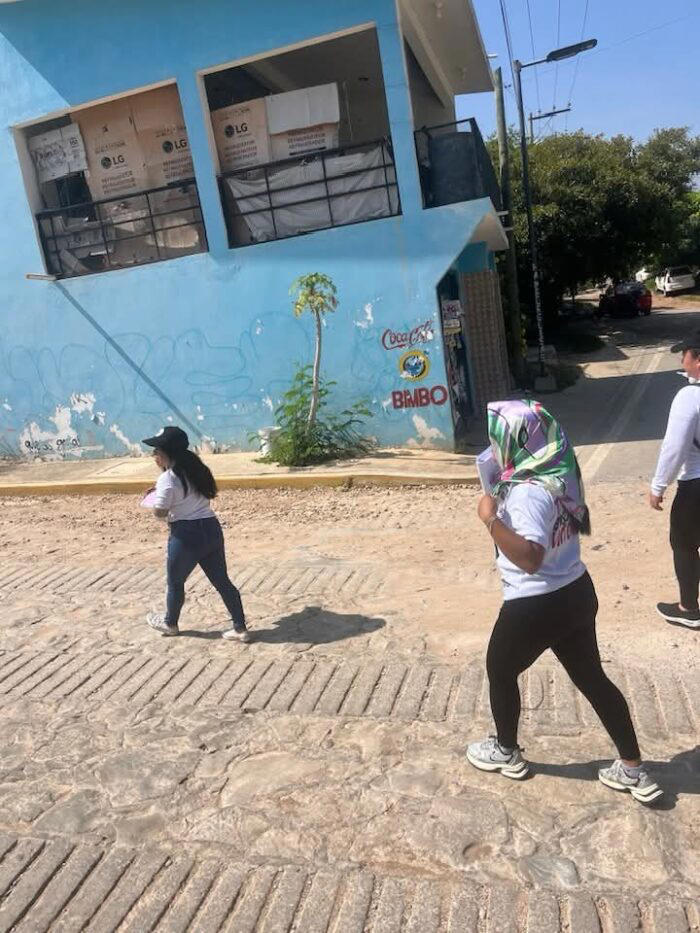
He asserted that this facilitates outreach to the population that sees the files, since until now, when they conduct searches, local people don’t understand what they are doing.
He said that since this initiative, five cases have been added to the collective.
We have two cases from the municipality of Tila, where Chol is spoken, and we have five cases here in Yajalón, since this is the area where Tzeltal is spoken.
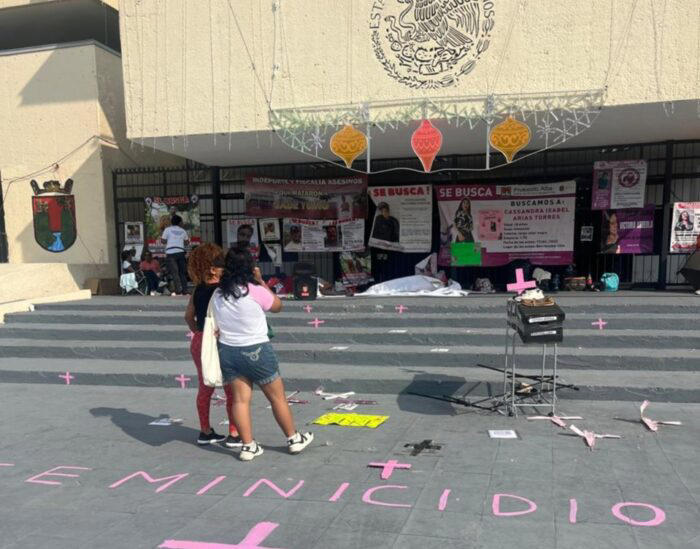
He added that in total, “the collective has 14 investigation files with 16 cases, because we have one case where two brothers disappeared, and we have another case where a father and son disappeared.”
Gómez also reported that they have recently discovered missing persons thanks to anonymous reports. She also spoke about the case of Jonathan Estrada Vázquez and the obstacles encountered by authorities.
“We have found two girls, one 15 and the other 18, from Coita (Ocozocuautla). Jonathan’s family has already decided to accept his remains because the Prosecutor’s Office wanted to investigate him as a homicide, but the family said no.”
This is because the Chiapas State Attorney General’s Office (FGE) refused to investigate the disappearance, and “we even struggled to obtain a death certificate because the prosecutor’s office wouldn’t disclose the cause of death.”
Finally, she stated that her collective is pioneering these pieces in indigenous languages.
“We believe we are the only ones doing these translations. I don’t know if there are anyone else in the entire country, but we know it is very important for the search for people,” she concluded.
Source: msn