Learn about the mysticism, rituals, and cemeteries of Chiapas
What is the Day of the Dead like in Chiapas?
In southeastern Mexico, where the mists of the jungle intertwine with ancient history, Chiapas holds one of the most authentic and moving encounters with death in the entire country. The Day of the Dead, known in many communities as Jolobil or Ch’ulelal, is an intimate and spiritual reunion. Far from the hustle and bustle of big cities, here the tradition is lived with ancestral respect, fusing Mayan and Zoque customs with Catholic doctrine. It is a journey that invites you to unearth the secrets of a culture that honors its dead with light, color, and profound devotion.
How the Day of the Dead is Celebrated in Chiapas
The Day of the Dead celebration in Chiapas is a range of rituals that vary among the indigenous communities of the Highlands, the Lacandon Jungle, and the Central Depression.
Day of the Dead in San Juan Chamula
In this region, the holiday is called K’santo or All Saints’ Day. In San Juan Chamula, the celebration takes place in the cemetery, where the earthen graves, crowned with wooden crosses and adorned with marigold flowers, become the epicenter of social life. Entire families sit around the graves, sharing food and drinks in a communion that honors their ancestors.
Along with the marigold flowers, they serve beer, bread, cola, water, sour atol, tamales, or fruits like sugarcane and orange. It’s common to see mariachis and norteño groups playing while some drink beer and mourn beside their dead.
Unlike Chamula, this cemetery appears clean and orderly. People remain silent, and those who speak do so in low voices out of respect for their deceased. Here, there’s no noise, no one listens to music, and neither are the mariachis and norteño groups. No one is seen consuming alcohol. Tourists or visitors feel safer among the Zinacantecos. Prayer leaders pass from grave to grave and receive alms for the church in exchange for praying, in their Tzotzil language, for the souls of the deceased.
In the Zoque region, the cult of the dead takes on an even more special meaning. In towns like Ocozocoautla de Espinosa and San Fernando, preparation for the return of the souls begins long before November 1 and 2. The houses and the cemetery are carefully cleaned, with the belief that a clean home attracts souls to visit their loved ones. It is a welcoming celebration where grief is transformed into joy, and death is perceived as a transition, not an end.
Day of the Dead Celebration in Comitán and Tuxtla
The central focus of the celebration is the cemeteries. In Comitán de Domínguez, for example, residents gather at the municipal cemetery to clean and decorate the graves, turning the cemetery into a garden of flowers and candles. As night falls, the candlelight creates a dreamlike spectacle, illuminating the crosses and opening a path for the souls’ return.

In Tuxtla Gutiérrez, the state capital, the celebration is more urban but equally meaningful. Families visit cemeteries, bringing offerings and flowers, and gather to share stories and memories. Local markets are filled with color and tradition, with the sale of Chiapas-style bread of the dead, which has a unique texture and flavor, and pumpkin and sweet potato sweets that are a staple in any offering. The city is perfumed with incense and marigolds, creating an atmosphere of respect and joy.
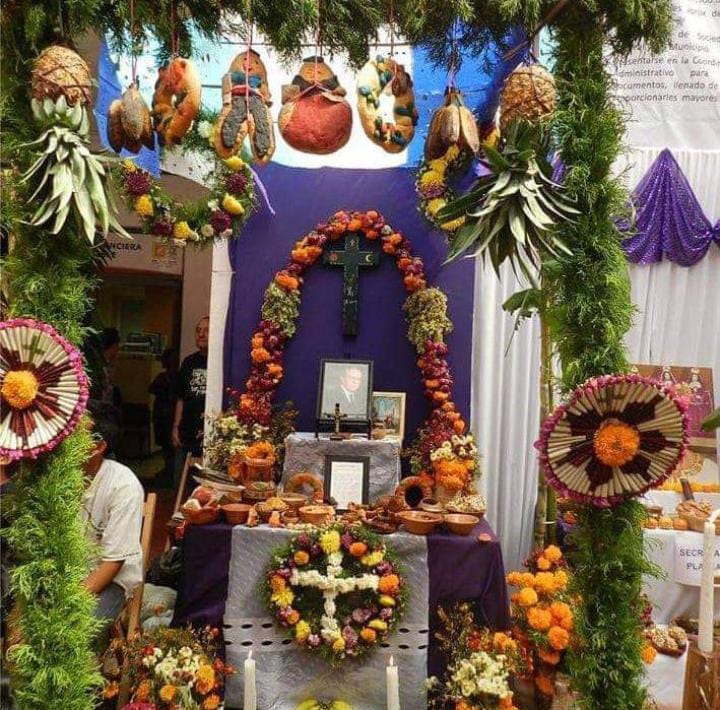
Chiapas altars are a reflection of the state’s cultural richness. Unlike other regions, here they are often built with several levels that symbolize the different planes of existence. Although the marigold is indispensable, in Chiapas, a variety of local flowers are added, such as the flower of the dead (Salvia leucantha) and the lion’s foot, which give it a distinctive touch.
Day of the Dead in Chiapas
Food and drink offerings are a key element. Traditional dishes such as turkey mole, chipilín tamales, and beans are placed. Pumpkin and yucca sweets are also placed, as well as the traditional bread of the dead. Candles and copal are essential, as their smoke and light are believed to guide the souls’ journey. Each altar is a personal universe, an intimate tribute to the life and tastes of the person being honored.
Day of the Dead in Chiapas: An Immersive Experience
Visiting Chiapas during the Day of the Dead is something you must experience firsthand. For a complete experience, start in San Cristóbal de las Casas, a colonial city that becomes a hub for visiting the nearby communities of the Chiapas Highlands. From there, excursions can be arranged to Zinacantán, where the cult of the dead is a celebration of color and flowers, or to San Juan Chamula, to witness the purification ritual in the cemetery.
Immersion in the festival involves not only seeing the altars, but also participating in the daily lives of the people. In the markets, the aromas of traditional foods mingle with those of incense. It is a time when communities open up to share their culture and spirituality with visitors, and when death becomes a reason for gathering and celebration.
Source: mexicodesconocido