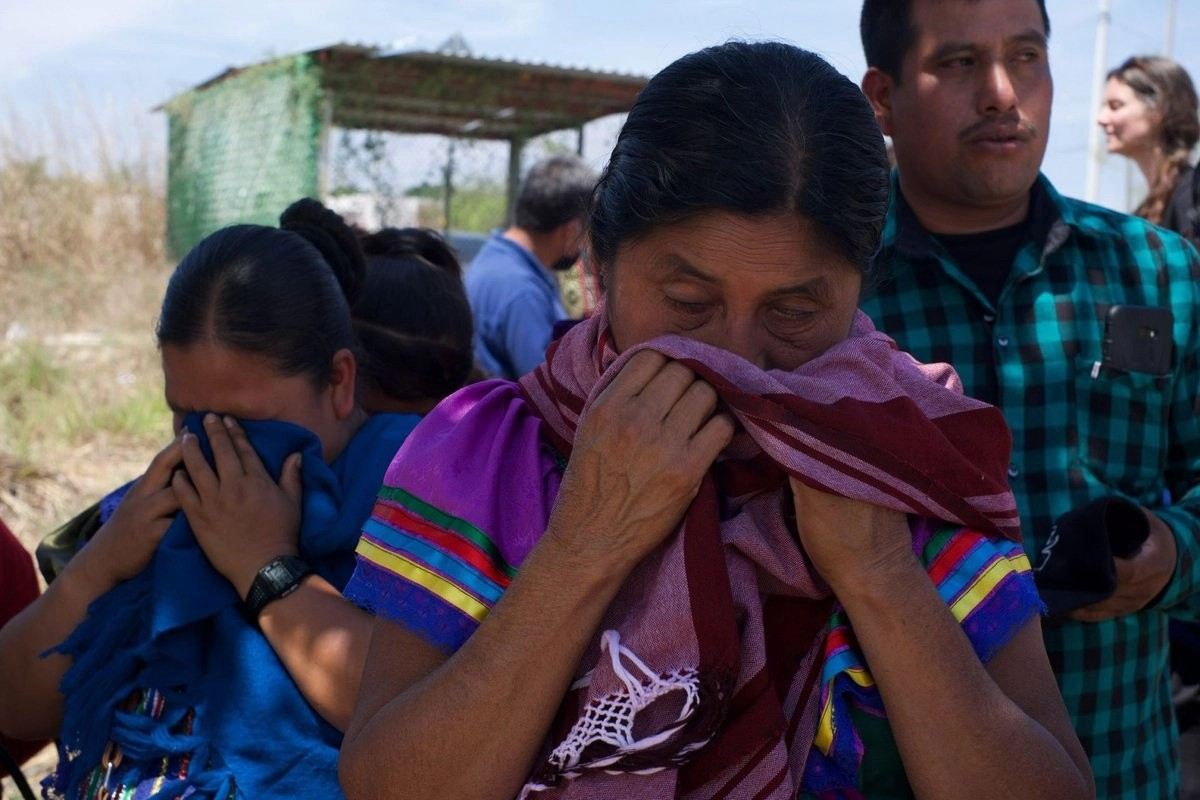

The communities located in the Chimalapas region, which comprise the Northwest Regional Council of the municipality of Cintalapa, stated that they are “engaged in a desperate battle for their territorial and agrarian rights, housing, health, and education,” among others.
On the occasion of the 62nd anniversary of the legal existence of the General Rafael Calymayor community, they recalled that “it all began when the Supreme Court of Justice of the Nation (SCJN) announced that the lands we have occupied for over 60 years are located in Oaxaca, not Chiapas, as we have believed and lived all this time, even though we possess legal documents such as presidential resolutions and basic records.”
They affirmed that “all of this plunged (the communities) into an abyss of uncertainty due to the accusation by the Chimalapas community members that we are on their lands, and since then it has meant threats, evictions, the burning of clinics and public buildings, and even deaths.”
They asserted that these community members “have lacked solid evidence and relied on questionable testimonies, such as claims that we are not Indigenous, that we are drug-trafficking ranchers, or predators of the rainforest, thus casting doubt on their legitimacy from the outset.”
Given this situation, they reiterated, “the communities in the area sought refuge in the federal courts and the Chiapas state government, where they found a glimmer of hope through complaints and denunciations of abandonment by the federal and state governments, despite numerous hearings at the Ministry of the Interior, the Supreme Court of Justice of the Nation (SCJN), and various state authorities under several administrations. However, this path toward securing land tenure and obtaining some infrastructure support became a cruel trap, as since the 2012 Supreme Court ruling, there has been no response to our demands.”
They stated that “despite having obtained favorable agrarian rulings, the Agrarian Court is once again reversing course with the intention of invalidating our decisions and attempting to strip us of our land rights, heeding the demands of the Chimalapas community members who are once again resorting to death threats and violent evictions, as they have done in the past.”
The Northwest Regional Council of Cintalapa maintained that “legal trickery, unjustified delays, and bureaucratic ploys have become weapons in the hands of our accusers, indefinitely prolonging the suffering of our families, who face recycled accusations from the Chimalapas and endless hearing requests that erode our hope.”
They added that “the rights won over more than 60 years with so much effort are being revoked at every turn, while the favorable rulings remain a dead letter, forcing us once again to defend ourselves against the legal machinery designed to perpetuate injustice.”
He warned that “in the midst of the legal storm, the lack of support, and the threats of eviction, the families and farmers remain steadfast, resisting the onslaught of a system that seeks to stifle our voice and nullify our struggle. The future of our communities remains at stake, hanging by a thread entangled in the legal web that imprisons it.”
He concluded: “We, the 17 communities, will respond more united than ever; we will go as far as necessary to exercise our rights as Indigenous peoples, rights granted to us by the Political Constitution of our country, and we will fight against the legal maneuvers used to prolong the processes. Every page reveals a web of injustice and complicity and does nothing to prevent a confrontation between our peoples, since our fellow community members from Chimalapas are constantly announcing the eviction from our lands. Although we want to avoid a confrontation, we also tell them that we will not allow the eviction and the loss of our rights to the land and to development.”

Source: jornada