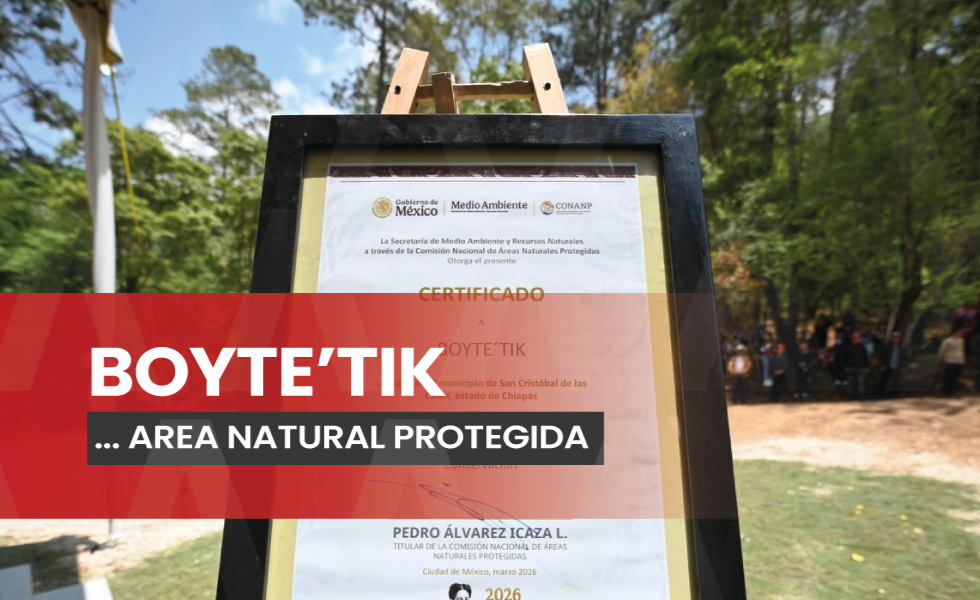

The National Commission of Natural Protected Areas (CONANP), an agency within the Ministry of Environment and Natural Resources (SEMARNAT), certified a new Voluntary Conservation Area on April 23, 2026: Boyte’tik, located in the La Albarrada ejido, in the municipality of San Cristóbal de las Casas, Chiapas. The area encompasses 500 hectares, and the declaration strengthens the network of protected natural areas in the Highlands of Chiapas, recognizing the efforts of the Tzotzil indigenous community to preserve their forests.
According to CONANP, headed by Pedro Álvarez Icaza Longoria, Boyte’tik—which in Tzotzil means “forest” or “place of trees”—protects pine-oak and oak-pine forest ecosystems. In its higher elevations, between 2,400 and 2,500 meters above sea level, various species of bromeliads and epiphytes grow, providing habitat for reptiles and amphibians, mosses, and lichens. Its forests offer refuge to butterflies, beetles, spiders, tree frogs, snakes, resident and migratory birds, as well as the fly agaric mushroom (Amanita muscaria), which is considered threatened. In total, the area is home to more than a thousand species of animals and plants.
The area is located in the Grijalva-Usumacinta hydrological basin and is linked to the headwaters of the San Felipe, Fogótico, and Amarillo rivers. Therefore, its conservation is vital for safeguarding the water resources of the Jovel Valley and for providing environmental services to the urban area of San Cristóbal de las Casas.
The area was declared a Voluntary Conservation Area, a designation that allows communities, ejidos (communal landholdings), and private landowners to request federal protection for their lands from CONANP (National Commission of Natural Protected Areas). With this certification, CONANP will promote biological monitoring, scientific research, the sustainable use and management of natural resources, and low-impact tourism in the area.
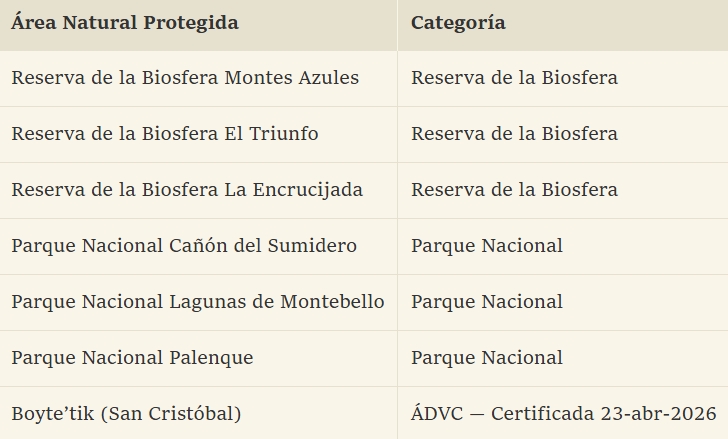
Chiapas is the Mexican state with the largest federally protected area. Some of the state’s main protected areas are:
The ejido of La Albarrada is one of the areas that has maintained traditional practices for the conservation of forests, water, and biodiversity. Its community organization is governed by the system of Uses and Customs, which maintains a strong organizational and religious autonomy, centered on the council and the mayordomos (stewards). Federal certification opens the door to public funding for specific actions: wildlife monitoring, sustainable forest management, low-impact ecotourism, and environmental education.
CONANP (National Commission of Natural Protected Areas) highlighted the commitment of the Tzotzil indigenous communities to join in the conservation of Mexico’s biocultural heritage, fostering respect for the land and recognizing their roots as part of their natural, religious, and cultural elements.
The Boyte’tik declaration comes in a context of increasing pressure on the state’s natural resources due to the expansion of the agricultural frontier, illegal logging, and urbanization. Protected Natural Areas not only protect biodiversity: they guarantee water for the watersheds that supply communities and cities, regulate the local climate, and are fundamental reserves in the face of climate change. For the people of Chiapas, conserving Boyte’tik means protecting the springs that feed the rivers and the water supply of the Jovel Valley and the urban area of San Cristóbal de las Casas.
The main changes were: correction of the vegetation type, removal of unsubstantiated references to the UNDP and ECOSUR, incorporation of the area (500 ha), the correct hydrological basin, the Tzotzil identity of the community, and the system of uses and customs.

Source: alertachiapas