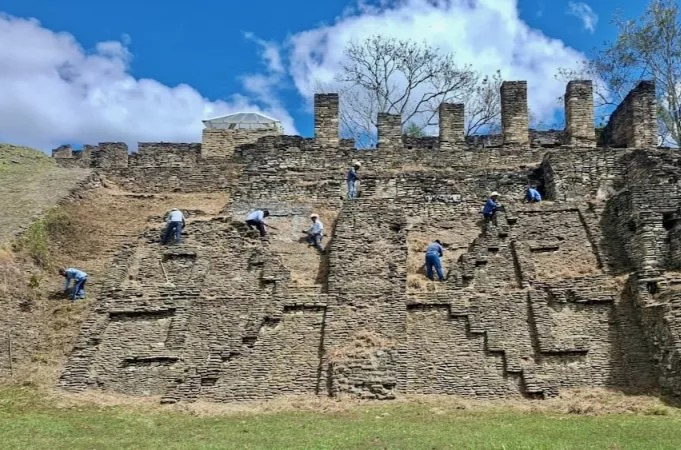

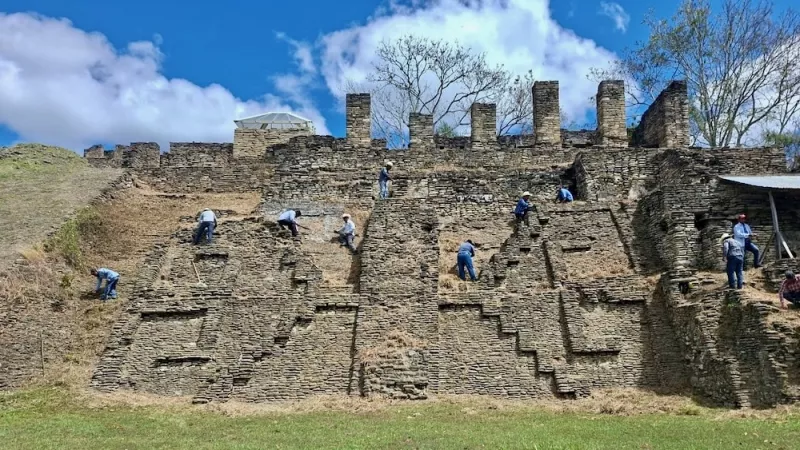
In March 2026, the Chiapas government decided to reopen 9.22 hectares of the Toniná archaeological zone, one of the most important Mayan cities in Mesoamerica. For many years, the site had been under private control, and after several failed negotiations, the government decided to resort to expropriation to restore public access, reintegrate it into the national heritage, and expand tourism while ensuring environmental protection and social benefits.
Toniná exemplifies the strategy the Chiapas state government is promoting within the tourism sector to diversify its sources of development and generate greater income for historically marginalized communities.
According to data from INEGI (the Mexican National Institute of Statistics and Geography), tourism-related activities represent approximately 10% of the state’s economy, while more than 750,000 inhabitants (12% of the population) depend directly or indirectly on activities related to lodging, transportation, food, guides, and local commerce.
Segundo Guillén, Chiapas’ Secretary of Tourism, says that given the social and economic importance of tourism in the state, the government is working on implementing a strategy that combines heritage conservation, economic development, and environmental protection through programs where local communities participate directly in tourism operations.
The Toniná archaeological zone is part of a tourist corridor connecting San Cristóbal de las Casas with Palenque, one of the most popular tourist routes in the state. Its strategic location also aims to extend the length of stay for visitors in the region and distribute tourist spending across different municipalities.
The restoration of archaeological zones like Toniná has become one of Chiapas’s main initiatives to promote a sustainable tourism model with a community focus. According to UN Tourism data, nature tourism and community-based experiences are growing at an average rate of 20% annually in the country, driven by travelers interested in biodiversity, cultural heritage, and low-impact activities.
Responsible Tourism as a Way to Preserve Traditions and the Environment: Businesses and the government are key players in promoting tourism that considers not only economic impacts, but also social and environmental ones.
“Toniná is one of the most important Mayan archaeological sites, not only in Chiapas, but in Mesoamerica. It is located right in the middle of a very important tourist route and was a must-see destination for those visiting the state,” the official points out.
The restoration of archaeological sites is occurring in parallel with a state strategy focused on positioning Chiapas as one of the country’s leading nature tourism destinations, combining environmental conservation, heritage restoration, and community participation.
Guillén emphasizes that the Chiapas government’s tourism strategy aims to have local communities directly operate a significant portion of the tourism services. In regions like the Lacandon Jungle and the Tacaná volcano area, residents are already participating as certified guides, ecotourism operators, and nature center managers.
“What we do is provide training and specialization because nature tourism is a highly specialized segment. Today, we are certifying guides and tour operators so they can sell their tourism products directly and no longer depend on intermediaries,” explains Guillén.
The strategy also includes the creation of more regional tourism corridors to extend the average stay of visitors. The intention, explains the secretary, is to move away from the traditional model of quick tours and promote longer trips focused on community and conservation experiences.
“We want to move beyond the typical tour where tourists just hop on and off a van without really getting to know the state. The goal is for people to stay longer and discover a deeper and more diverse Chiapas,” the secretary maintains.
The tourism model is also linked to environmental conservation policies. Chiapas is home to some of Mexico’s main natural reserves and boasts high biodiversity, according to the National Commission of Natural Protected Areas (Conanp). The state government affirms that it is working in coordination with environmental authorities to establish guidelines for carrying capacity and responsible visitor management.
“The communities want to protect their environment, but also generate income. When they see that tourism can help them conserve nature and improve their livelihoods, they become guardians of these natural spaces,” says the secretary.
Source: egs.expansion