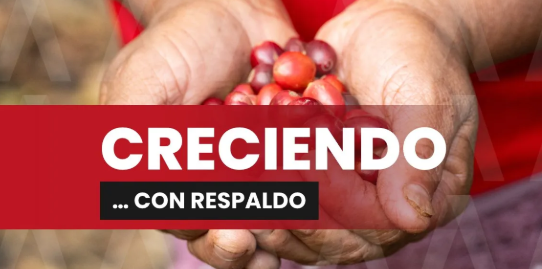

A woman coffee farmer from Montecristo de Guerrero climbs into the coffee trees before dawn, picking ripe red cherries through the Sierra’s morning mist before carrying a heavy sack down to the community courtyard. She has spent years doing the same work: hand-harvesting, using a borrowed pulping machine, and selling her coffee to the first buyer willing to set a price. This Monday, for the first time, she returned home with her own coffee pulper, new coffee plants, and a sack of fertilizer.
The same scene was repeated across several municipalities in the Frailesca region on June 22, 2026, when Governor Eduardo Ramírez Aguilar led a tour to deliver support through the state program Coffee with Humanism (Café con Humanismo) and launch infrastructure projects, according to the Chiapas State Government’s Institute of Social Communication (ICOSOyRP). The initiative is part of the strategy implemented by the Chiapas Coffee Institute (INCAFECH) to revive coffee production, a cornerstone of the state’s rural economy.
What is Coffee with Humanism and who benefits from it?
Coffee with Humanism is the program through which the Government of Chiapas seeks to strengthen the entire coffee value chain, from the coffee plant to the final cup. It was launched on February 9, 2026, at a nursery in Chilón and, according to official information from the Government of Chiapas, is expected to benefit more than 25,800 coffee producers across the state. In the coffee-growing regions, women—who perform much of the fieldwork—are among the primary beneficiaries.
The program provides coffee plants, agricultural inputs, equipment, and training while partnering with academic and research institutions such as the Autonomous University of Chiapas (UNACH), the Polytechnic University of Chiapas, and the National Technological Institute of Mexico network. Its broader goal is to improve the quality of Chiapas coffee and increase the income of producers in the state’s 87 coffee-producing municipalities.
Key Program Data
| Category | Official Figure |
|---|---|
| Producers benefiting | More than 25,800 |
| Coffee plants to be distributed | 6.2 million |
| Tool packages | 5,447 |
| Coffee pulping machines | 1,300 |
| Coffee-producing municipalities involved | 87 |
| Program launch | February 9, 2026 (Chilón) |
Source: Government of Chiapas / INCAFECH.
The program also includes agricultural input packages, nurseries, training sessions, coffee cupping services, and barista events designed to connect producers with the specialty coffee market. Additionally, it offers low-interest loans to help rehabilitate coffee plantations, according to the Government of Chiapas.
What was delivered in the Frailesca region?
During the June 22 tour, the governor distributed coffee plants and seeds, backpack sprayers, tool kits, agricultural inputs, coffee pulping machines, and fertilizer in Montecristo de Guerrero and Ángel Albino Corzo, according to the official government report. The event also included public infrastructure projects aimed at reducing the region’s long-standing infrastructure deficiencies.
| Project / Action | Municipality | Investment |
|---|---|---|
| Roads connecting Jaltenango–Ejido Querétaro and E.C. San Francisco–Palestina | Ángel Albino Corzo | More than 20 million pesos |
| Educational infrastructure for community schools | Montecristo de Guerrero | 10 million pesos |
| Capitán Luis A. Vidal–Montecristo de Guerrero highway section | Montecristo de Guerrero | 75 million pesos |
Source: Government of Chiapas (ICOSOyRP). Figures are based on the official announcement.
The state government also reaffirmed its commitment to conduct feasibility studies for rehabilitating the La Concordia–Jaltenango highway, a key transportation route for moving coffee harvests from the mountains. These figures come from the official state announcement, and their implementation should be monitored through future progress reports.
Why does it matter for Chiapas?
Chiapas is Mexico’s leading coffee-producing state. Coffee farming supports tens of thousands of families across the Sierra, Soconusco, Highlands, and Selva regions. However, the sector has faced challenges for years, including coffee leaf rust, low international prices, and aging coffee plantations. A program that provides new plants, coffee-processing equipment, and affordable credit directly addresses these obstacles, although its long-term success will depend on whether the support reaches producers in time for the production cycle.
How to register and where to apply
The Chiapas Coffee Institute (INCAFECH) is responsible for maintaining the state’s coffee producer registry, including registration, enrollment, and issuing producer credentials by municipality. If you are a coffee producer and want to access these benefits, the general steps are:
- Gather your official identification (INE), CURP, and proof that you produce coffee (receipts, an ejido certificate, or documentation from your producer organization).
- Visit an INCAFECH office or inquire about registration campaigns in your municipality to join the official coffee producer registry.
- Request information about the current Coffee with Humanism benefits, including coffee plants, pulping machines, agricultural inputs, training, and loans.
- Follow official announcements from the Government of Chiapas regarding application periods and distribution events.
The main INCAFECH offices are located at Carretera Juan Crispín a Chicoasén Km. 2.5, Col. Plan de Ayala, C.P. 29110, Tuxtla Gutiérrez, telephone 961 12 10 366. The Institute’s official directory can help applicants locate the appropriate department. Since eligibility requirements and funding amounts may vary by application cycle, applicants are encouraged to confirm details directly with the Institute before beginning any procedures.
Frequently Asked Questions
Who can receive these benefits?
Coffee producers from Chiapas’ coffee-growing municipalities, particularly those in the Sierra, Soconusco, Highlands, and Selva regions. Women are among the primary beneficiaries in several areas.
Is registration free?
Enrollment through INCAFECH is an official government procedure. Applicants should verify the requirements and documentation directly with the Institute to avoid unauthorized intermediaries.
What does the program provide?
Coffee plants, seeds, coffee pulping machines, backpack sprayers, tool kits, agricultural inputs, fertilizer, training, and access to low-interest loans.
Meanwhile, the coffee farmer from Montecristo de Guerrero stores her new pulping machine under shelter and looks back toward her coffee trees. The coming harvest will still depend on the weather, international coffee prices, and her own hard work on the steep mountainside. But for the first time in many years, one part of her work—processing her coffee cherries—will no longer depend on a borrowed machine.
Source: alertachiapas