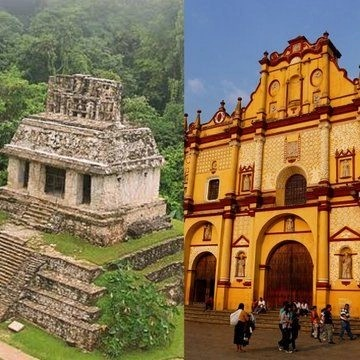

Ten civil society organizations and the local diocese’s justice and peace vicarage demanded “the immediate suspension of the San Cristóbal-Palenque highway project” because “it represents a serious threat to the region’s biodiversity, local ecosystems, and the indigenous communities that have inhabited and protected these territories for generations.”
They warned “of the profound social and environmental impacts that this project—officially inaugurated on June 8—will cause. Deforestation, ecosystem fragmentation, and biodiversity loss will be some of the irreversible consequences for the region.”
Furthermore, they stated, “we fear that indigenous communities will face dispossession of their territories, the loss of their traditional ways of life, and increased conflict and social vulnerability, as has already been observed with other development projects.”
In a joint statement, they stated that “proposed under a vision of capitalist and extractivist ‘development,’ the project ignores the fundamental principles of respect for the collective rights of indigenous peoples, enshrined in the Mexican Constitution and international treaties, such as Convention 169 of the International Labor Organization (ILO) and the United Nations Declaration on the Rights of Indigenous Peoples, signed by Mexico.”
They asserted that “instead of strengthening the well-being of these communities, the project ignores their needs, violating their autonomy and damaging their cultural heritage and common goods, our common home, Mother Earth. Development should not be limited to economic growth or the construction of infrastructure.”
Grouped under the so-called Slamalil Kinal Platform for Peace in Chiapas, the 10 organizations, including the Fray Bartolomé de Las Casas Human Rights Center (Frayba), the Economic and Social Development of Indigenous Mexicans (DESMI), and Services and Advisory Services for Peace (Serapaz), demanded the holding of “legitimate, prior, free, and informed consultations, in accordance with national and international standards; the protection of the region’s territories, biodiversity, and cultural heritage; and a genuine development model that respects and benefits indigenous peoples rather than violating their rights.”
They added: “We are concerned about consultations like those coordinated by the Chiapas state government, as they do not meet national and international standards for prior, free, and informed consultation, and are culturally relevant in predominantly indigenous areas. Holding a popular consultation excludes the effective participation of the peoples and communities directly affected, who also have their own vision of development or well-being.”
They stated that “indigenous communities and human rights organizations have publicly expressed their opposition to the project and filed injunctions, both in the consultation process and against the project itself.”
They emphasized: “The civil society organizations that belong to Slamalil Kinal express our concern regarding the environment, human rights, and the collective rights of indigenous peoples in light of the development of the San Cristóbal-Palenque mega-highway construction project.”
Source: jornada